B2B Direct Mail · 6 Min. Read
Dimensional Direct Mail B2B: Why Physical Mail Outperforms Digital in 2026
The question is not whether direct mail or digital is better. The question is for what. In 2026 the data on this is no longer ambiguous — and for B2B companies trying to reach senior decision-makers, the numbers favor physical mail by a significant margin.
The 2026 Numbers
B2B direct mail averages a 4.4% response rate in 2026, according to the ANA/DMA Response Rate Report — roughly 36 times higher than email’s 0.12%. 84% of marketers report direct mail delivers their highest ROI of any channel in 2026, up from 67% in 2022. Omnichannel campaigns integrating direct mail with retargeted digital ads are reaching conversion rates as high as 31.4%.
These numbers do not make email obsolete. Email is cheaper, faster, and more measurable at scale. But they do clarify something that experienced B2B marketers already know: the average inbox sees 100+ marketing emails per week; the average mailbox sees 1 to 3 marketing pieces per day. Mail competes for attention in a channel with measurably less noise — which is why its response rates have held strong while digital channel response rates have declined.
Why Dimensional Direct Mail Outperforms Flat Mail
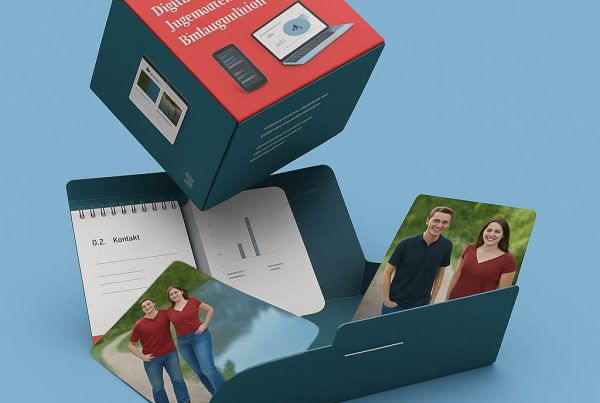
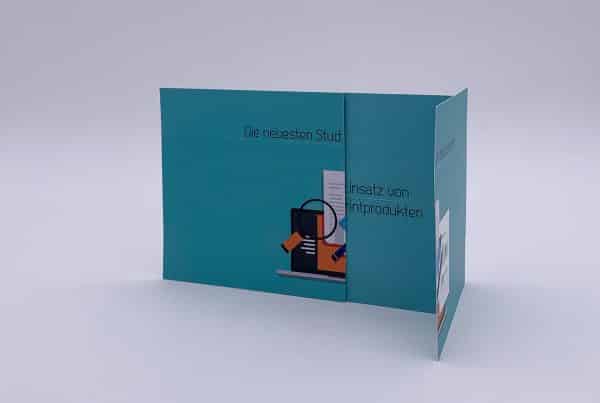
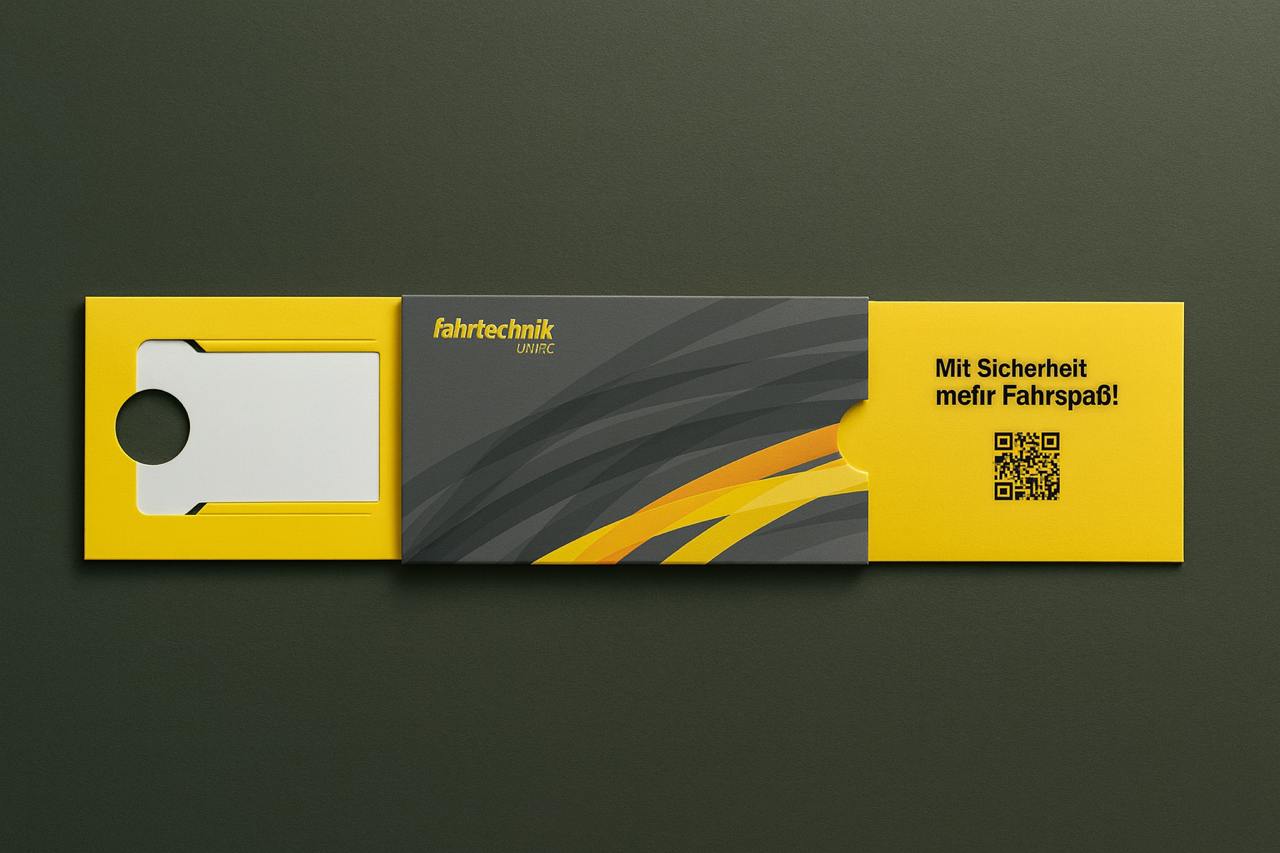
Standard direct mail — a postcard, a letter, a flat brochure — already outperforms digital on response rate. Dimensional direct mail takes that advantage further. A pop-up card that unfolds in three dimensions, a spring cube that pops out of its packaging automatically, an endless fold card that the recipient keeps unfolding — these formats create a physical experience that flat print cannot replicate.
The mechanism is neurological. Physical interaction with a mail piece requires more cognitive engagement than passive visual scanning — and that engagement drives stronger memory encoding. A decision-maker who opens a spring cube and watches it pop into shape has had a brand experience, not just a brand impression. That experience stays associated with the sender long after the piece is put down. This is the core advantage of dimensional direct mail over every other format in the B2B marketing mix: it is the only format that creates a tactile brand memory.
For ABM campaigns targeting a defined list of senior buyers, the unit economics also work in dimensional mail’s favor. LinkedIn B2B campaigns now average ,480 CAC per closed deal in 2026. A dimensional direct mail piece that reaches the same decision-maker costs a fraction of that per unit — and stays on the desk for weeks rather than disappearing after one scroll.
What Each Channel Does Best
This is not an argument against digital. It is an argument for knowing what each channel does well and deploying it accordingly.
Digital is stronger for: Reach and frequency at low cost. Measurable performance at click and conversion level. Behavioral targeting and retargeting. A/B testing in real time. Speed — a digital campaign can be live in hours.
Dimensional direct mail is stronger for: Reaching senior decision-makers who filter email and ignore digital ads. Creating dwell time — a piece that stays on a desk is seen daily. Brand differentiation — the format itself communicates investment and intentionality before a word is read. Unaided recall — physical interaction creates stronger memory encoding than any digital format. Longevity — a slat card or spring cube that stays on a decision-maker’s desk keeps the brand visible through a buying cycle that in B2B SaaS now averages 134 days.
The Strongest B2B Campaign Sequence
The highest-converting B2B campaigns in 2026 are not digital-only or mail-only. Direct mail’s conversion rate of 5.3% rises to 28% when combined with digital ads. The sequence that produces that result is consistent: physical mail arrives first, creates a brand moment, and anchors the message in memory. Digital follow-up — email, LinkedIn, retargeting — arrives after, reinforcing the message in a channel where the brand is now recognized rather than unknown.
A dimensional direct mail piece sent one week before a planned outreach call changes the nature of that call entirely. “Did you get our piece?” is a different opening than cold email number four in a sequence that looks like every other outreach in the decision-maker’s inbox. The physical piece does the awareness work; the digital campaign does the conversion work. Together they outperform either channel alone by a significant margin.
More on dimensional direct mail formats: pharma trade show outreach, trade show promotional materials, and how these formats perform across the full B2B sales cycle.
Direct mail vs. digital is the wrong frame. The right frame is: at which moment in the buying cycle does a senior decision-maker need to encounter your brand physically — and what format creates the memory that keeps you in consideration until the decision is made? In 2026, the answer to that question almost always involves something three-dimensional arriving in an envelope.
Frequently Asked Questions
What is the B2B direct mail response rate in 2026?
B2B direct mail averages a 4.4% response rate in 2026, according to the ANA/DMA Response Rate Report — approximately 36 times higher than email at 0.12%.
What is dimensional direct mail?
A physical mail piece with a three-dimensional or interactive element — a pop-up card, a spring cube, an endless fold card, or a video brochure. The format creates a physical brand experience that flat postcards and standard letters cannot replicate, resulting in significantly higher dwell time and brand recall.
Does direct mail outperform digital for B2B?
For reaching senior decision-makers who filter email and ignore digital ads, dimensional direct mail consistently outperforms digital on response rate, dwell time, and unaided brand recall. Combined with digital follow-up, conversion rates reach 28–31%.
What is the minimum order quantity?
From 50 units — suited for targeted ABM campaigns or high-value prospect lists of any size.
How long does production take?
12–14 business days from print approval.