How does a jumping cube work? Technology simply explained.
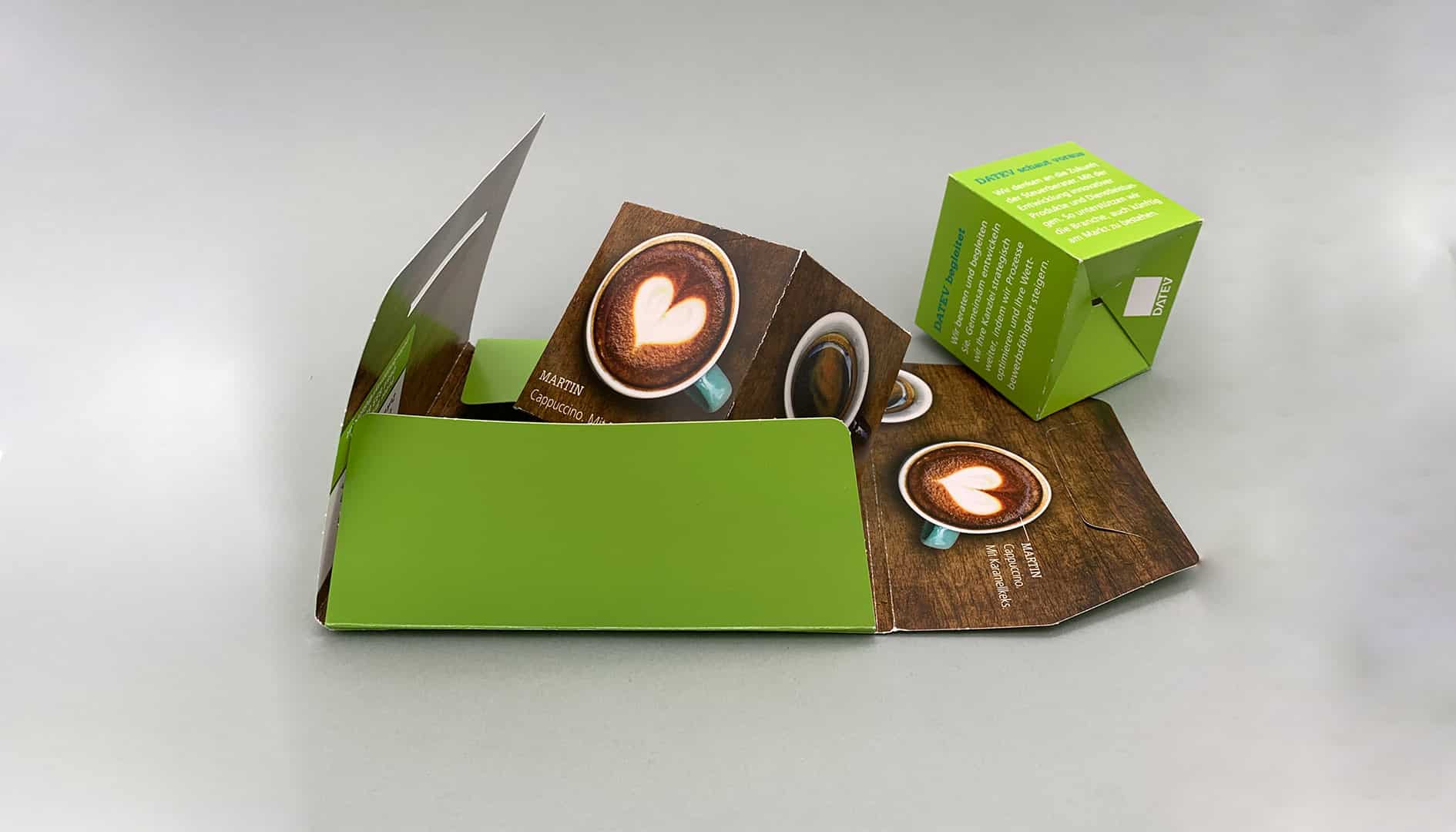
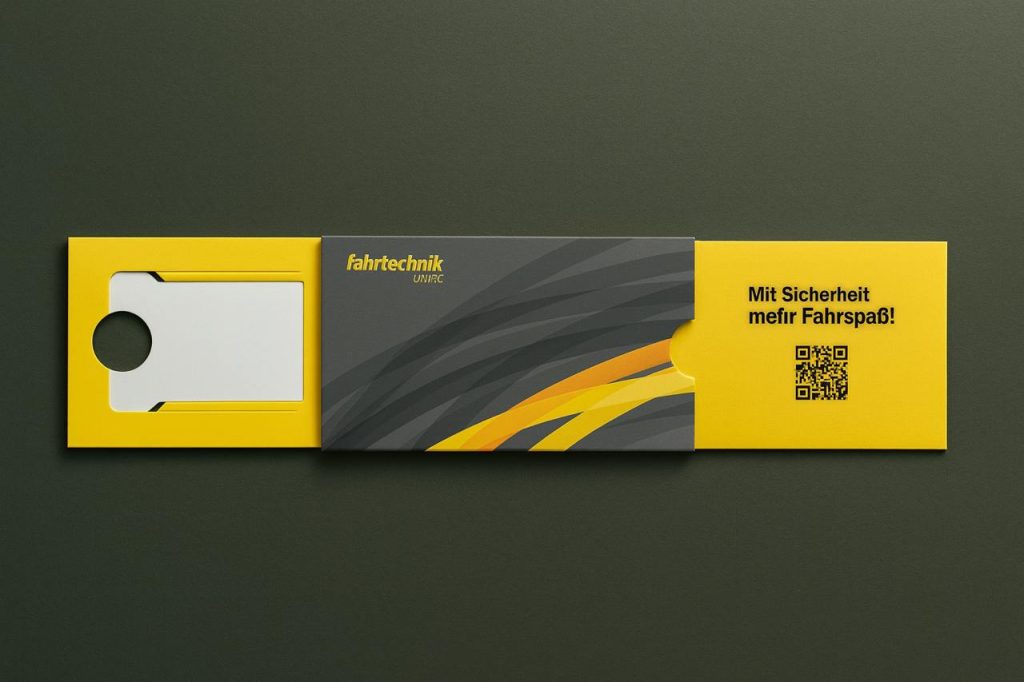
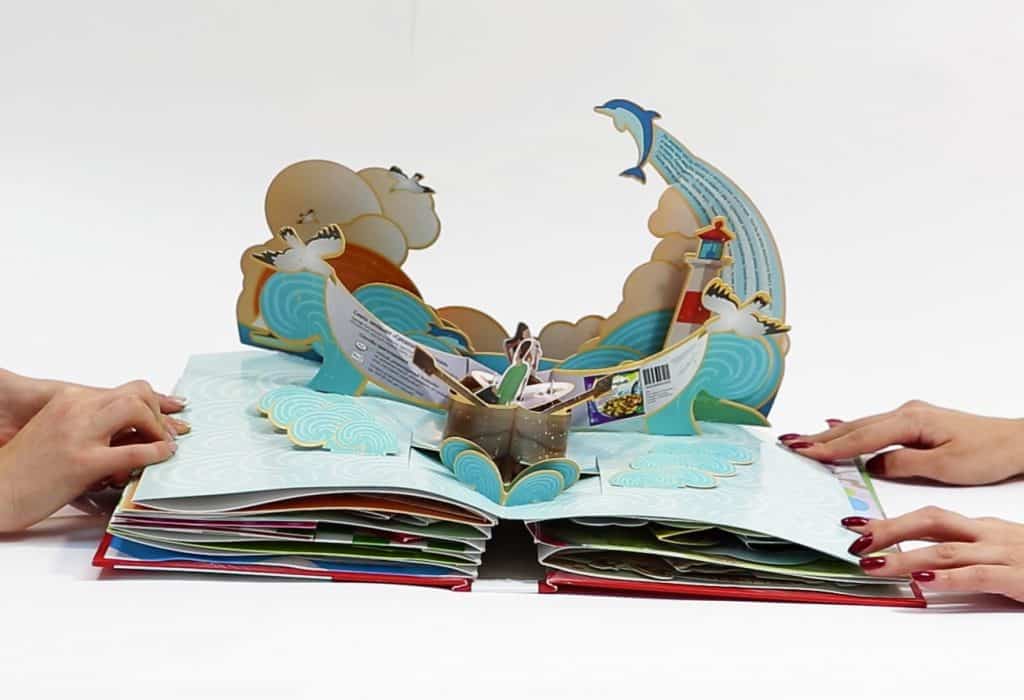
The jumping cube is an interactive advertising medium that automatically pops up when packaging is opened and unfolds into a three-dimensional shape. It is precisely this surprise effect that makes it a particularly effective tool in marketing production.
But how does a jumping cube actually work? In this article, we explain the jumping cube function and the mechanism behind it in a simple and understandable way.
What is a jumping cube?
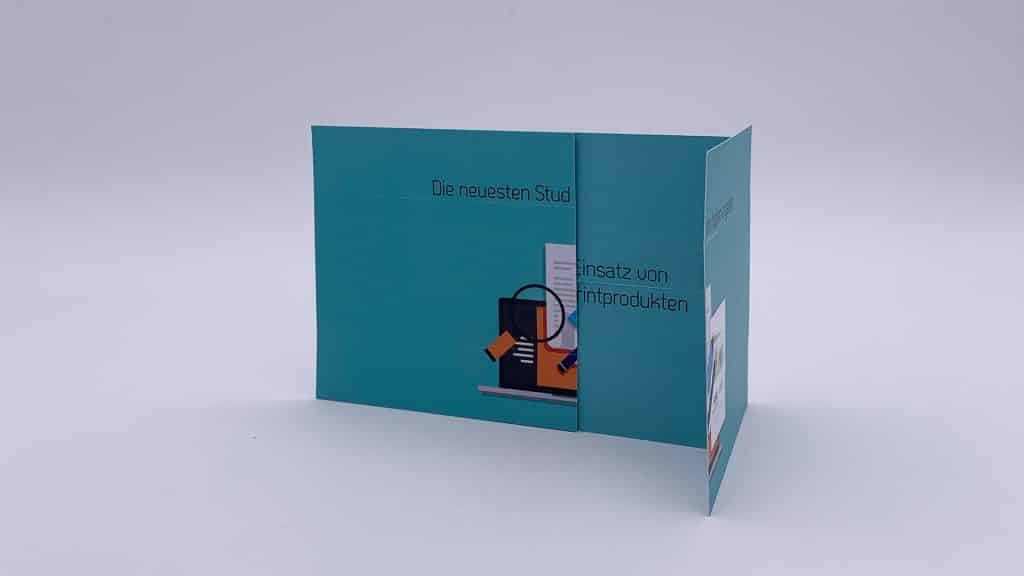
A bouncing cube is a special form of 3D card that is activated by a mechanical folding and tension effect when opened. It is often used in packaging or mailings to attract attention and bring a brand to life.
When flat, the cube is folded up compactly. As soon as the packaging is opened, it unfolds automatically and takes on its three-dimensional shape.
Jumping cube function: How the effect is created
The jumping cube function is based on a combination of folding technology, material tension and intelligent design.
Essentially, the mechanism works like this:
- The cube is folded under tension
- Special fold lines define the subsequent shape
- The stored voltage is released when the door is opened
- The cube “jumps” into its 3D structure
This effect creates a surprising moment that immediately attracts the recipient’s attention.
The jumping cube mechanism in detail
The jumping cube mechanism is the result of precise development and production. The decisive factors are:
- Choice of material: The paper or cardboard must be flexible enough to be folded, but strong enough to hold its shape
- Folding technique: Precise fold lines are crucial for clean unfolding
- Glue dots: They hold the construction together and control the movement
- Tension: The stored energy in the material creates the “spring” effect
Even small deviations in production can influence the function. Experience in the development of such mechanisms is therefore crucial.
Jumping cubes: How do they work in marketing?
In addition to the technology, its use is crucial. A bouncing cube works particularly well when it is specifically integrated into campaigns:
- Direct mailings: higher opening and interaction rates
- Product launches: products can be experienced visually and physically
- Trade fairs & events: Strong attention-grabbing effect at the stand
- POS: Differentiation directly at the point of sale
The surprising effect means that the message is remembered for longer and clearly stands out from traditional advertising media.
Development and production of bouncing cubes
The realization of a functioning jumping cube requires experience in design, construction and production.
You can find out more about development and implementation on our page for
Jumping cube production
Or discover our expertise in the entire
print production
Conclusion
The bouncing cube is much more than a simple advertising medium. Its impact is based on a sophisticated interplay of mechanics, material and design.
If you understand how a bouncing cube works, you can use it in a targeted way to increase attention, promote interaction and make campaigns more effective.
Frequently asked questions
What is a jumping cube?
A jumping cube is an interactive print product that automatically unfolds when opened and “jumps” into a larger shape. This surprising effect creates a playful experience that immediately attracts attention and remains in the memory.
What are the advantages of a bouncing cube in marketing?
The element of surprise immediately generates attention and significantly increases interaction. Users engage with the product for longer, which means that the brand message is perceived more sustainably.
Which contents are suitable for a jumping cube?
Content that can be distributed across several areas, such as product information, campaign messages or visual stories, is ideal. Before-and-after effects or multi-level content can also be creatively implemented.
What formats and sizes are possible?
Jumping cubes can be produced in different sizes, from compact mailing formats to larger presentation cubes. Depending on the concept, special formats and finishes are also possible.
How long does it take to produce a skipping cube?
The production time is usually between 1 and 3.5 weeks, depending on the print run and complexity. It can vary accordingly for more complex projects or individual requirements.
How much does a bouncing cube cost?
The costs depend on the size, material, mechanics and print run. Compared to classic print products, the jumping cube is more expensive, but offers a significantly higher level of attention and interaction.