Video in Print · B2B Sales · 5 Min. Read
Video Brochure for B2B Sales: The Print Format That Closes More Deals
A standard leave-behind sits on a prospect’s desk until it’s recycled. A video brochure sits on a prospect’s desk until someone picks it up, opens it, and watches the video play automatically — which is every time it gets picked up. That is not a marketing claim. It is a mechanical fact.
What Is a Video Brochure?
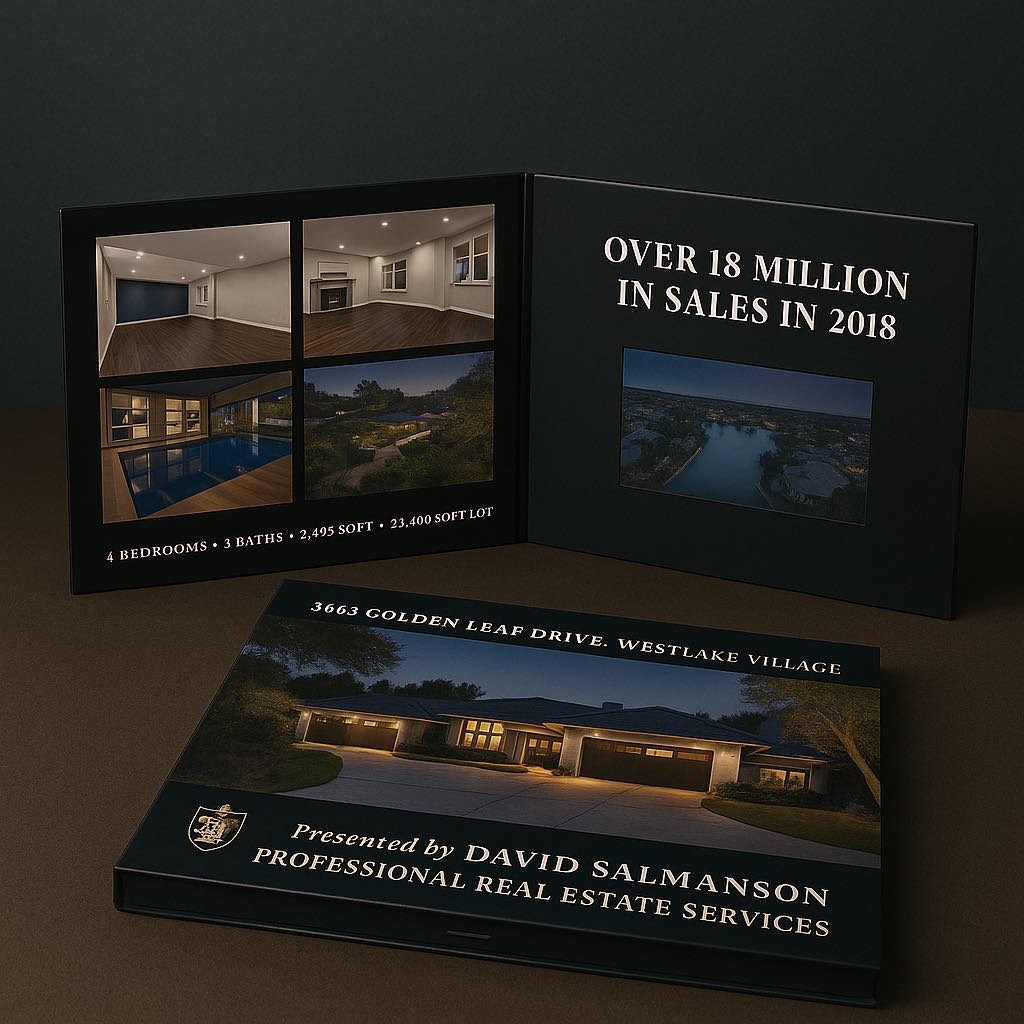
A video brochure is a premium printed piece with a built-in HD LCD screen and speaker. Open it and the video plays automatically — no smartphone, no QR code, no app, no internet connection required. The screen is integrated directly into the print piece and runs on an internal rechargeable battery loaded via USB.
The format closes the gap between two things B2B sales teams have always needed separately: the credibility and permanence of a physical sales asset, and the persuasive power of video. 73% of B2B decision-makers prefer to watch product demo videos rather than read whitepapers or brochures. A video brochure puts that video directly in the buyer’s hands — not on a screen they might never open, but in a physical object they can hold, keep, and show to colleagues.
Screen sizes typically range from 4.3 to 10 inches. Multiple videos can be loaded and accessed via individual buttons — useful for field reps presenting different product lines or service packages to different stakeholders in the same organization.
B2B Sales Use Cases
The strongest use case is the in-person sales call. The rep hands the buyer the video brochure, the buyer opens it, the video plays. The conversation starts from a shared visual reference rather than a cold pitch. Products that move, processes that run in real time, customers who describe their results in their own words — everything that static print cannot communicate, a video brochure delivers in the first 90 seconds of a meeting.
As a post-meeting leave-behind, the video brochure solves the problem every B2B sales rep knows: the decision doesn’t happen in the room. It happens later, when the rep isn’t there, when the buyer is discussing options with colleagues or a buying committee. A standard brochure gets stacked with others. A video brochure gets picked up, opened, and played — repeatedly, and by multiple people. Video brochures stay on desks, get shared internally, and get rewatched — driving lower cost per impression and longer brand exposure than any static leave-behind format.
For ABM outreach and high-value prospect mailings, a video brochure mailed to a named decision-maker at a target account makes the same statement a personalized gift does — but with a measurable sales message attached. Combined with digital follow-up, the response rate differential over flat mail is significant. More on the data: dimensional direct mail B2B performance in 2026.
For trade show and conference outreach, the video brochure is the piece that doesn’t get left on the hotel room desk. It travels home because it’s too interesting to discard, too premium to throw away, and plays the brand’s message every time someone picks it up. More on conference and trade show strategy: B2B trade show promotional materials.
Video Brochure vs. QR Code: Why the Difference Matters
The QR code video is the default workaround — print a code, link to a video, hope the buyer scans it. The problem is the friction. Pulling out a phone, opening the camera, scanning the code, waiting for the page to load, then watching the video — in practice, this sequence breaks at multiple points. In a sales meeting or after a long call, most recipients simply don’t complete it.
A video brochure has no friction. Open it, video plays. That is not a small difference. 95% of B2B buyers say video helps them better understand products and services — but only if they actually watch it. The video brochure is the only format that guarantees the video gets seen, because the mechanism is automatic and physical rather than digital and optional.
The second difference is what the format communicates before the video even starts. A QR code says: we made a video and printed a code. A video brochure says: we invested in this conversation. That signal matters to enterprise buyers, where perceived vendor quality influences shortlist decisions before a single feature is evaluated.
Industries and Applications
Manufacturing and industrial: Show the machine running, not a photo of it. Field reps in capital equipment, automation, and specialty manufacturing use video brochures to demonstrate products that cannot travel to the sales call. The buyer sees the equipment in operation — dimensions, speed, output, precision — before the first factory visit.
Real estate and construction: Visualize what doesn’t exist yet. Developers, architects, and commercial real estate firms use video brochures to present renderings, walkthroughs, and project timelines in a format that conveys scale and quality more effectively than any printed prospectus.
Pharma and MedTech: Demonstrate clinical procedures and device operation to HCPs in the format they actually engage with. A pharma rep leaving a video brochure after a physician meeting reaches the doctor again every time the piece is picked up — without scheduling another appointment.
Enterprise SaaS and tech: Send your product demo to the buying committee. When a champion can’t get all 13 stakeholders in a demo, a video brochure mailed to each decision-maker ensures the demo travels — to the CFO, the IT lead, the end user — in a format that plays automatically without a rep present. For creative invitation formats alongside your sales campaign, mycube.store offers pop-up cube formats that complement the video brochure in multi-touch sequences.
For a full range of branded promotional products to complement your video brochure campaign, the PHILU promotional products shop offers over 70,000 items. See all video brochure formats and screen sizes — from compact 4.3-inch sales leave-behinds to full-presentation 10-inch formats.
A video brochure for B2B sales is not a novelty. It is a sales infrastructure investment — one that keeps presenting your message after the rep has left the room, without requiring the buyer to do anything except open it. In a buying cycle that averages 134 days in enterprise B2B, that ongoing presence is worth more than most digital ad spend.
Frequently Asked Questions
What is a video brochure for B2B sales?
A premium printed piece with a built-in HD LCD screen and speaker. Open it and the video plays automatically — no smartphone, no QR code, no app. Used in B2B field sales as a presentation tool, post-meeting leave-behind, and high-value prospect mailer.
How is a video brochure different from a QR code video?
A QR code requires the recipient to open their phone, scan the code, and wait for the page to load. A video brochure plays automatically on open — zero friction, zero steps, zero drop-off. In a sales meeting or post-call follow-up, that difference determines whether the video actually gets watched.
Which industries use video brochures in B2B sales?
Manufacturing and industrial (showing equipment in operation), real estate and construction (visualizing unbuilt projects), pharma and MedTech (clinical procedures and device demos), financial services (complex product explanations), and enterprise SaaS (product demos that reach buying committees without a rep present).
What is the minimum order quantity?
From 50 units — lower than most US competitors who typically require 100 or more.
How long does production take?
4–6 weeks from print approval and video delivery. For conference or event deadlines, we recommend 8 weeks from first contact.